

Peer-to-peer city learning: how Utrecht went from grey to green
Kerri is currently retained by EU’s €1.2bn URBACT programme as lead expert for the Urban Pioneers Accelerator (UPA), which is supporting 27 cities in the Western Balkans with issues affecting their vulnerability to climate change, loss of urban green areas and biodiversity, and associated challenges for quality of life and social cohesion.
As a part of the UPA programme, Kerri is designing and leading a number of study visits for the UPA cities to other cities across Europe who have developed best practice in urban sustainability and green infrastructure, to help improve their transferable knowledge and skills.
Kerri recently took 25 participants from 9 UPA cities to Utrecht in the Netherlands, for an intense, immersive introduction into how the city has reversed 40 years of concrete urban development to restore urban greenspaces and biodiversity, and improve its resilience to severe weather events and climate change impacts such as urban heat islands, through an integrated and long-term approach to urban nature.
The itinerary for the study visit focused on 2 challenges emerging from the ‘State of the Art’ assessment report Kerri had written in summer 2025, and identified by the UPA cities themselves as most critical, namely:-
How to design and deliver integrated urban greening, which also enhances placemaking; quality of life; climate change mitigation; and biodiversity preservation & restoration
How to use urban greening as a tool for long-term citizen engagement and social inclusion
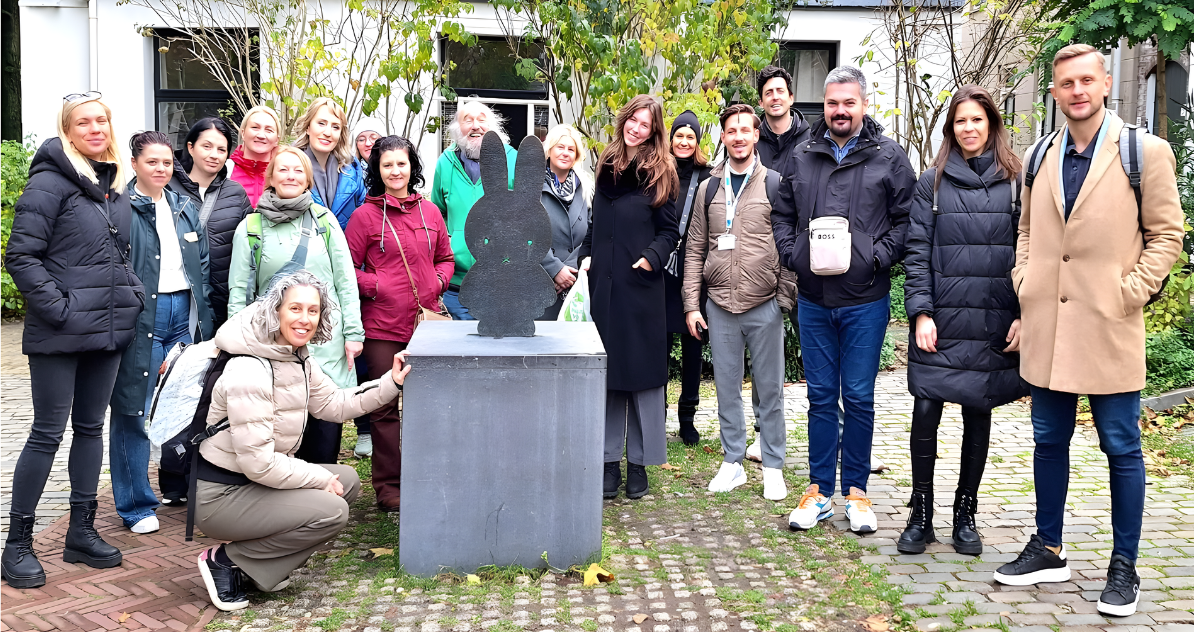
UPA Urban Nature study visit to Utrecht
Source: Kerri Farnsworth (2025)
The UPA participants were introduced to Utrecht’s overarching Healthy Urban Living strategy, backed up with multiple site visits and ‘walkshops’ (walk-talk-learn) to key projects. Pioneer-led activities, such as workshops, quizzes, etc, saw the participants actively test & apply this learning to their own cities, with the support and advice of colleagues from Utrecht, and encouraged them to problem-solve together as peers.
Highlights of the Visit for the UPA cities included:-
the new Rijnvliet ‘Edible Neighbourhood’, where 1,100 Net-Zero homes hare being built within an ecologically resilient 150,000 sq m urban food forest - including community orchards and edible hedgerows & verges - which doubles as green infrastructure providing recreational and ecosystem benefits, in addition to providing free, nutritious edible produce.
the restoration of Catherinesingel, 6km of the city’s 900-year-old inner-city canal system which was concreted over to create a 12-lane motorway in the 1970s. After Utrecht’s citizen voted in a referendum in favour of restoration the early-2000s, the canal re-opened to boats, wildlife and swimmers in 2020. A new citizen-led group called Vergroeningsingel030 now help to manage & maintain the Catherinsingel, along with all of Utrecht’s other city canals, including its unique livestreamed & citizen-controlled “Fish Doorbell”.
Urban ReLeaf, which uses citizen-controlled innovative technology to improve participatory and data-driven decision-making related to climate change adaptation and greenspace planning in their own neighbourhood
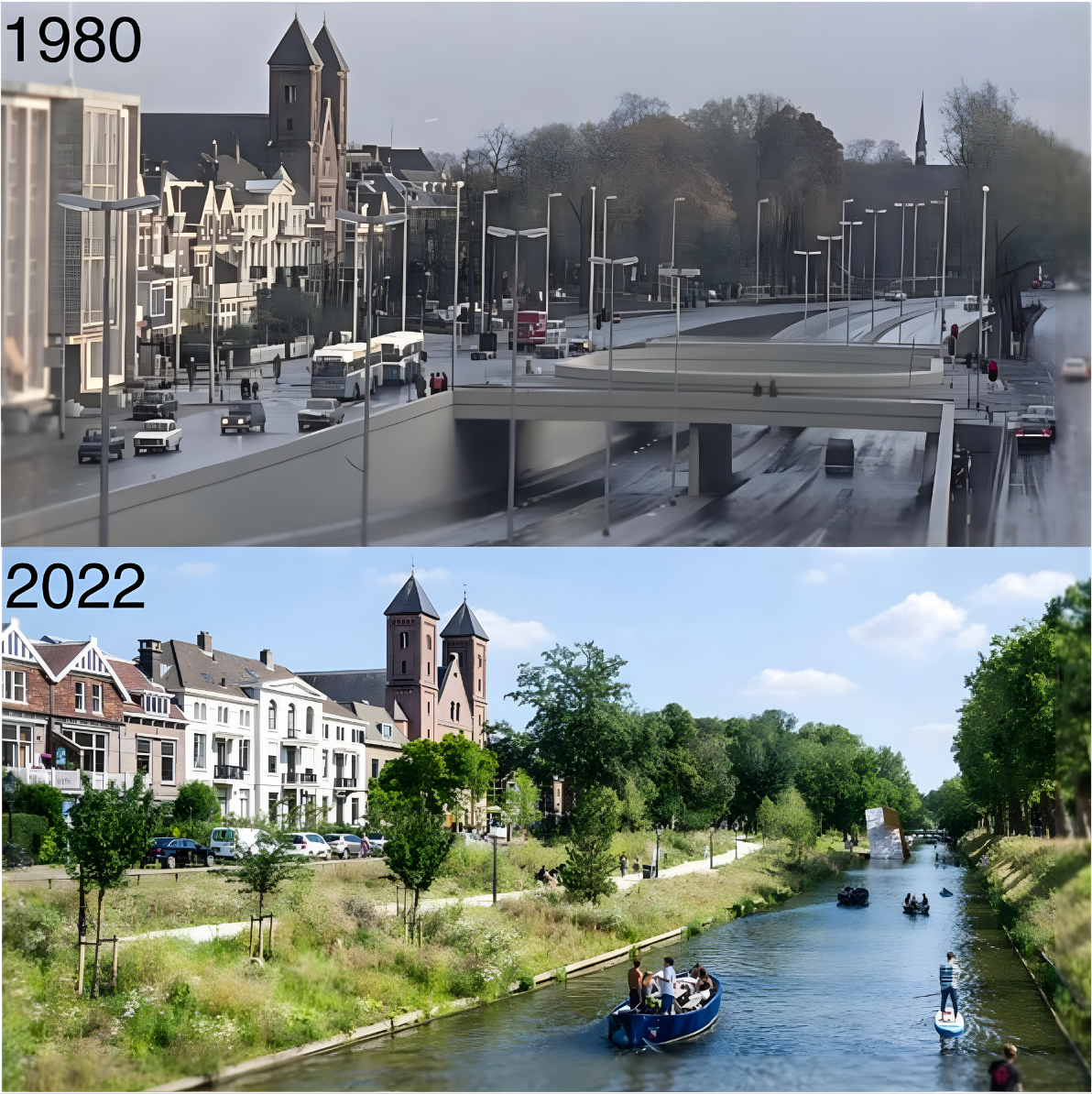
Catherinsingel, Utrecht: before & after restoration
source: Gemeente Utrecht (2022)
The next UPA study visit will be to the historic city of Guimarāes in Northern Portugal, which is the European Green Capital for 2026, and is one of the world’s leading exemplar cities for engaging citizens in integrated science-based green urbanism solutions.